
Ever seen a kid race through birthday money like it’s on fire?
Meet Jayden, age 9. For his birthday, he got $100—twenty from Grandma, a crisp fifty from his uncle, and the rest tucked inside glittery envelopes. Within four days, it was all gone. One trip to the toy aisle, two mobile game downloads, and a vending machine run later… Jayden was broke.
The worst part? None of it felt as good as he thought it would.
This “buy now, regret later” moment is becoming more common. On Reddit and tucked-away parenting forums, families are sharing stories of kids who spend fast and then spiral into frustration. And it’s no wonder. Kids are growing up in a world where spending is easier and faster than ever. Tap, swipe, click, gone.
So how do we help kids like Jayden pause before spending and learn to choose with intention?
The Power of the Pause
Here’s the magic trick: the pause.
If we can help kids pause before spending, even just for a minute, they start to shift from “I want it now!” to “Is it really worth it?”
Let’s go back to Jayden. A few weeks after his spending spree, he saw a remote control car he really wanted, but this time, he didn’t have the money. His parents sat down with him and asked:
“What if next time you save some before you spend?”
Together, they created a simple system:
- Save: 50% of any money he gets goes into his “Big Goal” jar
- Spend: 40% is for fun stuff—games, snacks, stickers
- Give: 10% goes to a cause he cares about (he chose the animal shelter)
Now, when Jayden gets money, he knows he can have fun—and work toward something bigger.
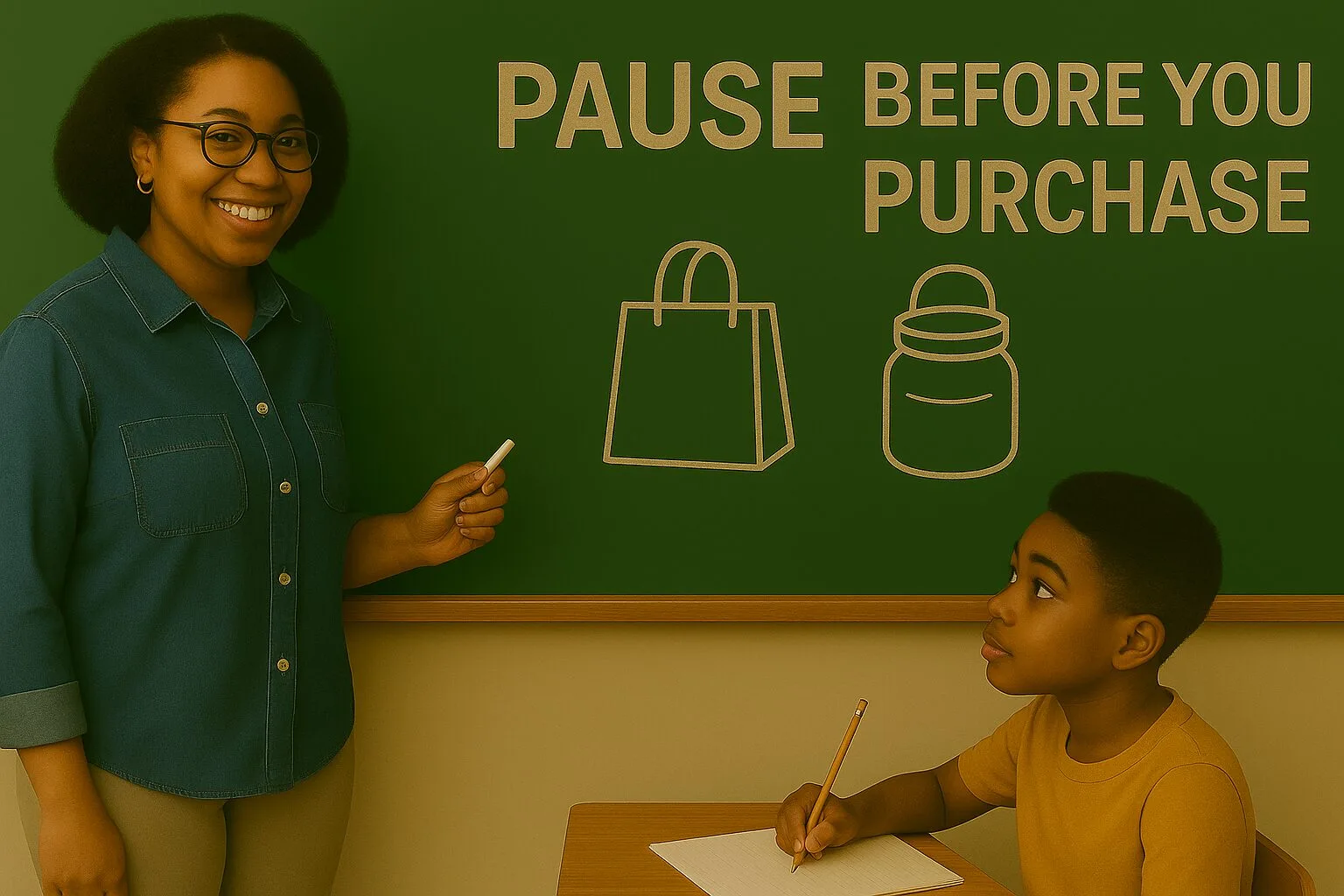
Try This: “Pause Before You Purchase” Activity
1. Set a 24-Hour Rule
The next time your child wants to buy something, practice waiting 24 hours before buying. Put a sticky note on the fridge that says, “We pause before we purchase!”
2. Ask These 3 Questions:
Let your child write or talk through their answers:
· Do I want this, or do I just want to buy something?
· Will I still care about this in a week?
· What might I miss out on if I spend this money now?
3. Celebrate Smart Choices
Whether they decide to wait or go for it, praise the thought process. That’s the real win.
- Let Kids Make Low-Stakes Mistakes. Blowing $10 on candy teaches more than a lecture ever will. Just be ready to talk about it after, not during.
- Model Your Own “Pause” Moments. Say out loud when you’re choosing to wait on a purchase: “I saw a new coffee maker I liked, but I’m giving it a day to think.” Let them see your pause in action.
- Make Space for Goals. Create a visible savings goal chart or jar. Help kids see the progress toward something they’re excited about. It keeps their eyes on the prize.
Final Thought
Teaching kids to pause before they purchase isn’t about saying “no” to fun. It’s about teaching them that money is a tool, not a toy, and that the best spending choices are the ones they actually feel good about tomorrow.
Because the real magic isn’t in buying stuff.
It’s in knowing you had a choice, and made a smart one.
At Kash Kids, we equip children with the tools to make smart money choices for life. Through hands-on lessons in financial literacy, we help kids build confidence, form healthy habits, and understand the value of every dollar. When children learn how money works early, they grow up ready to lead, save, invest, and thrive.